
TL;DR:
- B2B influencer marketing on LinkedIn has surged, becoming a key strategic channel for trust and credibility.
- Long-term collaborations with authentic experts generate deeper engagement and measurable pipeline impact.
- CMOs should focus on genuine co-creation, strategic partner selection, and tracking content saves, watch time, and CRM outcomes.
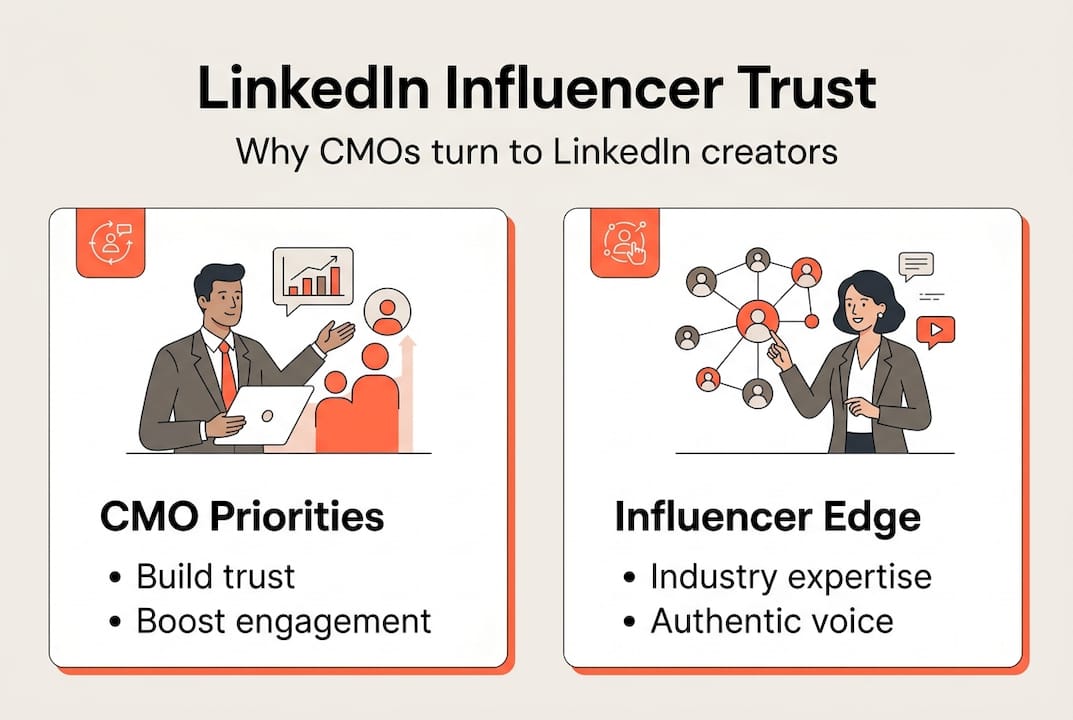
B2B influencer marketing is no longer a fringe experiment. It has become a core growth lever for marketing leaders who understand that credibility, not just reach, drives pipeline. Traditional review platforms are losing their grip on buyer trust, and the most forward-thinking CMOs are turning to LinkedIn creators to fill that gap. B2B influencer marketing use surged from 34% in 2020 to 85% in 2025, driven largely by LinkedIn’s rise as the home of professional thought leadership. If you still think influencer marketing is a B2C game, this guide will change your perspective.
Table of Contents
- Why trust and credibility matter in B2B buying
- The surge of LinkedIn influencer marketing for CMOs
- What makes LinkedIn influencers different for B2B brands
- How top CMOs tap LinkedIn influencers: Strategies and metrics
- The overlooked truth: Influencer trust multiplies when co-creation is real
- Scale your B2B LinkedIn influencer campaigns with Kawaak
- Frequently asked questions
Key Takeaways
| Point | Details |
|---|---|
| Trust drives deals | B2B buyers respond best to credible, authentic influencer voices on LinkedIn. |
| Long-term partnerships work | Co-creative influencer collaborations out-perform one-off sponsorships for CMOs. |
| LinkedIn is B2B’s home | The platform’s professional focus makes it ideal for sophisticated influencer programs. |
| Track real engagement | Follower growth, content saves, and CRM-attributed leads trump short-term clicks and likes. |
Why trust and credibility matter in B2B buying
B2B purchasing is not an impulse decision. When a company is evaluating a six-figure software contract or a complex services engagement, the buyer’s journey is long, committee-driven, and deeply skeptical. That skepticism is growing, and it’s reshaping where CMOs invest their budgets. 🎯
Traditional review sites like G2 and Capterra were once powerful tools for social proof. Today, many senior buyers view them as pay-to-play environments where ratings can be curated and reviews incentivized. The perceived neutrality is gone. Buyers are tuning out polished vendor content and seeking advice from people they actually respect, which means industry experts with genuine credibility and no obvious conflict of interest.
This is exactly where LinkedIn influencers step in. Unlike celebrity endorsers or lifestyle creators, LinkedIn’s most trusted voices are practitioners. They are operators, executives, and specialists who have lived the problems your buyers face every day. When they speak about a product or solution, their audience listens because the relationship is built on years of consistent, useful insight.
“CMOs use LinkedIn influencers primarily to build authentic trust and credibility with B2B buyers for high-value purchases.”
What does this mean in practice? It means that a respected supply chain expert endorsing your logistics platform carries more weight than a full-page ad in a trade publication. It means a cybersecurity practitioner explaining your product’s real-world value in a LinkedIn post reaches the exact decision-makers you want, in a context they trust.
Here is why LinkedIn specifically is the right arena for this:
- Professional context: Users are in a work mindset, actively seeking industry knowledge and solutions.
- Audience quality: LinkedIn’s user base skews toward decision-makers, directors, VPs, and C-suite leaders.
- Algorithmic reward: The platform amplifies content that generates genuine conversation, not just passive likes.
- Network effect: When a trusted voice engages with your brand, their network sees it, and credibility transfers.
Exploring LinkedIn creators’ influence on B2B growth reveals how this trust dynamic plays out across industries, from SaaS to professional services. The pattern is consistent: buyers trust people before they trust brands.
The surge of LinkedIn influencer marketing for CMOs
Having established trust as the foundation, let’s explore how LinkedIn influencer marketing has surged in popularity and what that means for CMOs.
The numbers are striking. B2B influencer marketing usage has climbed from 34% in 2020 to 85% in 2025, driven by LinkedIn’s deliberate investment in thought leadership tools and creator content features. This is not a trend. It is a structural shift in how B2B brands build awareness and pipeline. 📈
| Year | B2B influencer marketing adoption | Key driver |
|---|---|---|
| 2020 | 34% | Early adopters, mostly tech brands |
| 2022 | 57% | Post-pandemic digital acceleration |
| 2024 | 76% | LinkedIn creator tools expansion |
| 2025 | 85% | Mainstream B2B strategy |
Why is LinkedIn dominating this space? A few reasons stand out. First, LinkedIn’s algorithm actively promotes content that sparks professional dialogue, which means creator posts with genuine engagement get amplified far beyond the creator’s immediate network. Second, LinkedIn has invested in features like newsletters, collaborative articles, and thought leader ads that give brands scalable ways to co-distribute creator content.
“LinkedIn’s focus on creator content has made it the most effective platform for B2B brands seeking real audience engagement.”
CMOs running awareness campaigns on LinkedIn report that influencer-driven content consistently outperforms brand-only content on key engagement signals. Saves, shares, and comment depth are all higher when a credible voice is attached to the message. This matters because those signals feed LinkedIn’s algorithm, extending organic reach without additional spend.
Building a solid content workflow for B2B impact is essential for CMOs who want to scale this consistently, not just run one-off campaigns. And if you want the data behind LinkedIn’s dominance as a lead generation engine, LinkedIn’s B2B lead generation stats make a compelling case for prioritizing this platform above others.
For CMOs, the strategic implication is clear. LinkedIn influencer marketing is no longer an experiment you pilot with a small budget. It is a primary channel that deserves serious investment and a structured approach.
What makes LinkedIn influencers different for B2B brands
After seeing why so many CMOs flock to LinkedIn, it is crucial to look at what sets LinkedIn influencers apart for B2B results.
Not all influencers are created equal, and this matters enormously in B2B. A lifestyle creator with 500,000 followers on Instagram brings reach. A LinkedIn practitioner with 40,000 highly engaged followers in your target vertical brings something far more valuable: relevance and trust. 🔑
LinkedIn influencers in the B2B space are primarily educators. They build audiences by consistently sharing hard-won expertise, frameworks, and honest analysis. Their followers are not passive scrollers. They are professionals actively trying to solve the same problems your product addresses. That alignment is rare and powerful.

Short-term vs. long-term influencer collaborations
| Collaboration type | Typical outcome | Trust level | Pipeline impact |
|---|---|---|---|
| One-off sponsored post | Awareness spike | Low | Minimal |
| 3-month campaign | Moderate recall | Medium | Limited |
| 6+ month partnership | Deep credibility | High | Significant |
| Ongoing co-creation | Brand authority | Very high | Strong and sustained |
The data is clear. Long-term partnerships with LinkedIn influencers who genuinely understand your product yield deeper engagement and measurable results. A one-off post rarely moves the needle in B2B because buyers need repeated, consistent signals before they act.
Here is how to structure effective LinkedIn influencer partnerships:
- Start with alignment: Choose influencers whose professional background mirrors your buyer’s world. Shared context makes endorsements credible.
- Co-create, do not just brief: Involve the influencer in shaping the message. Their voice and framing will resonate far more than polished brand copy.
- Commit to duration: Plan for at least six months. Trust builds through repetition, not a single touchpoint.
- Enable real dialogue: Encourage the influencer to engage with comments on sponsored posts. Active conversation signals authenticity to the algorithm and the audience.
Pro Tip: Before signing any influencer partnership, review the comment sections of their recent posts. Are followers asking substantive questions and getting real answers? That depth of engagement is the true indicator of influence, not follower count.
Building strategic B2B partnerships on LinkedIn requires this kind of rigorous selection process. And for CMOs thinking about community dynamics, understanding LinkedIn community building through influencer marketing reveals how sustained creator relationships compound over time.
How top CMOs tap LinkedIn influencers: Strategies and metrics
With a clear understanding of why and who, let’s get tactical about how leading CMOs put these influencer relationships to work and what success actually looks like.
Selecting the right influencer is the first critical decision. CMOs who get this right focus on three filters:
- Industry depth: Does the influencer have real operational experience in your buyer’s domain? Credentials matter, but lived experience matters more.
- Audience fit: Use LinkedIn analytics and platform tools to verify that the influencer’s followers match your ideal customer profile by seniority, industry, and geography.
- Authenticity signals: Look for consistent posting, genuine engagement, and a track record of sharing opinions that are not always brand-friendly. Real experts disagree sometimes, and that honesty is what makes their endorsements credible.
Once you have the right partner, the mechanics of a high-performing campaign look like this. Commit to a minimum six-month collaboration. Build a content calendar together that maps to your buyer’s key questions at each stage of the funnel. Give the influencer real access to your product, your team, and your customers so their content reflects genuine understanding, not a surface-level brief.
Amplification is where many CMOs leave significant value on the table. LinkedIn’s Thought Leader Ads allow you to boost influencer posts directly from their profile, maintaining authenticity while dramatically extending reach. This is one of the most cost-effective formats in B2B paid media right now. Pairing organic influencer content with paid amplification creates a flywheel that compounds over the campaign duration.
Pro Tip: Use LinkedIn’s retargeting capabilities to serve Thought Leader Ad content to users who have already visited your website. They already know your brand. Seeing a trusted voice validate it accelerates their decision.
On metrics, the most effective campaigns track content saves, watch time, and CRM outcomes rather than chasing short-term conversions. Saves indicate that someone found the content valuable enough to return to. Watch time on video posts signals genuine interest. CRM-influenced pipeline tells you whether influencer touchpoints are appearing in your buyers’ journeys.
For deeper inspiration, exploring thought leadership for B2B gives you frameworks for structuring content that converts. You can also review LinkedIn campaign ideas and B2B sponsored content types to match formats to your specific campaign goals.
The overlooked truth: Influencer trust multiplies when co-creation is real
Most B2B influencer programs underperform for a simple reason: brands treat influencers as megaphones, not collaborators. They hand over a brief, approve a post, and wait for pipeline. That approach misses the entire point. 💡
The CMOs who see real results from LinkedIn influencer marketing do something different. They bring influencers into the conversation early. They share customer pain points, product roadmaps, and honest challenges. They let the influencer shape the message with the brand, not just for the brand. That distinction is everything.
LinkedIn’s social graph rewards credible conversation. When an influencer posts something that reflects genuine expertise and real engagement with a brand’s world, the audience feels it. Comments deepen. Saves spike. The content travels further because it earns attention rather than buying it.
Sustained value comes from this kind of authentic co-creation. It takes longer to set up and requires more trust on both sides. But the compounding effect on credibility and pipeline is dramatically higher than any one-off campaign. If you want to understand how LinkedIn creators’ impact translates into real B2B growth, the pattern is always the same: depth of collaboration predicts depth of results.
Scale your B2B LinkedIn influencer campaigns with Kawaak
Ready to put this guide into action? Finding the right LinkedIn creators, managing co-creative workflows, and tracking real business outcomes is complex when you are doing it manually.
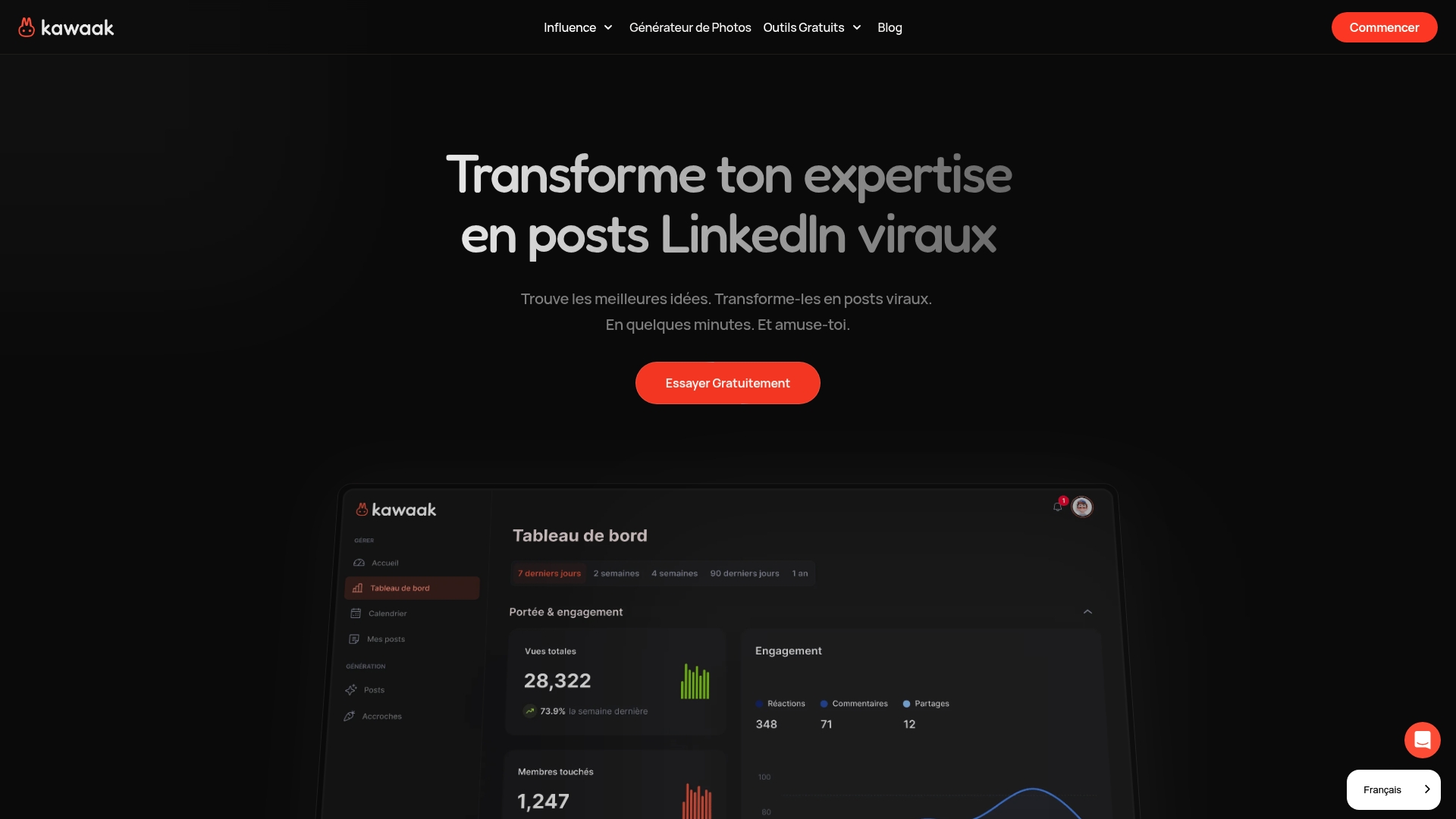
Kawaak is built specifically for this. The platform connects B2B brands with trusted LinkedIn creators who are ready to build authentic, long-term partnerships. You can browse creator profiles by industry expertise and audience fit, manage your Kawaak campaigns from a single dashboard, and track the engagement signals that actually matter for B2B pipeline. Whether you are launching your first LinkedIn influencer program or scaling an existing one, Kawaak gives you the infrastructure to do it efficiently and credibly. Stop guessing. Start building real influence. 🚀
Frequently asked questions
What are the main benefits for CMOs using LinkedIn influencers?
LinkedIn influencers build trust with B2B buyers for high-value purchases, delivering authentic audience engagement that traditional advertising cannot replicate. The primary benefits are credibility transfer, deeper engagement with decision-makers, and measurable impact on complex purchase decisions.
How do CMOs choose the right LinkedIn influencers?
They prioritize industry expertise and real operational experience over follower count, then verify audience fit using LinkedIn analytics to confirm that the influencer’s followers match their ideal customer profile by seniority and sector.
What metrics should B2B CMOs track in influencer campaigns?
Top CMOs focus on content saves, watch time, and CRM outcomes to measure genuine interest and pipeline influence, rather than optimizing for short-term clicks or impressions that rarely reflect real buyer intent.
Why choose LinkedIn over other platforms for B2B influencer marketing?
LinkedIn is the only major platform where professional context, decision-maker audiences, and algorithmic rewards for credible conversation all align, making it uniquely effective for building B2B trust at scale.