

Most B2B marketers treat LinkedIn thought leadership as a nice-to-have content strategy, posting occasionally when inspiration strikes. Yet 121% return on ad spend reveals LinkedIn’s unique power to convert professional insights into measurable business impact. The gap between casual posting and strategic thought leadership determines whether your brand blends into the feed or shapes industry conversations. This guide reveals how to harness authentic expertise, navigate common pitfalls, and measure real pipeline influence through LinkedIn’s distinctive professional ecosystem.
Table of Contents
- Key takeaways
- Understanding thought leadership’s unique role on LinkedIn
- Crafting authentic and credible thought leadership content
- Navigating challenges and myths in LinkedIn thought leadership
- Measuring and maximizing impact of LinkedIn thought leadership
- Leverage Kawaak to launch and scale your LinkedIn thought leadership campaigns
- FAQ
Key Takeaways
| Point | Details |
|---|---|
| LinkedIn ROAS advantage | LinkedIn delivers a 121 percent ROAS for B2B campaigns, demonstrating its power to convert professional insights into measurable business results. |
| Employee advocacy impact | Employee advocacy expands reach and credibility beyond brand channels by leveraging personal networks. |
| Authentic short posts | Short posts between 150 and 300 words drive quick engagement, while longer articles over 800 words build comprehensive authority. |
| POV Methodology Proof | Apply the POV plus Methodology plus Proof framework to turn your opinions into credible insights backed by evidence. |
| Track LinkedIn signals | Track LinkedIn signals such as DMs and profile views to measure ROI and map influence across the buyer journey. |
Understanding thought leadership’s unique role on LinkedIn
LinkedIn occupies a distinct position in the B2B marketing ecosystem. While other platforms prioritize entertainment or broad social connection, LinkedIn’s professional network creates an environment where expertise directly influences purchasing decisions. Decision makers actively seek vendor insights, industry analysis, and peer experiences to evaluate solutions and shape strategy.
The platform’s targeting capabilities and audience intent combine to deliver exceptional returns. LinkedIn Ads generate 121% ROAS for B2B campaigns, outperforming competing channels by significant margins. This efficiency extends beyond paid amplification. Organic thought leadership content reaches audiences already primed to value expert perspectives and translate insights into business action.
LinkedIn’s algorithm rewards specific content formats that facilitate meaningful professional exchange. Short posts between 150 and 300 words spark quick engagement and commentary. Longer articles exceeding 800 words establish comprehensive authority on complex topics. Questions invite community participation and surface diverse viewpoints. Each format serves distinct strategic purposes in building sustained influence.
Employee advocacy multiplies reach beyond what brand channels achieve alone. When team members share expertise from personal profiles, content benefits from individual networks and the authenticity premium audiences grant to personal voices over corporate accounts. This distributed approach transforms your organization into a network of trusted sources rather than a single branded entity competing for attention.
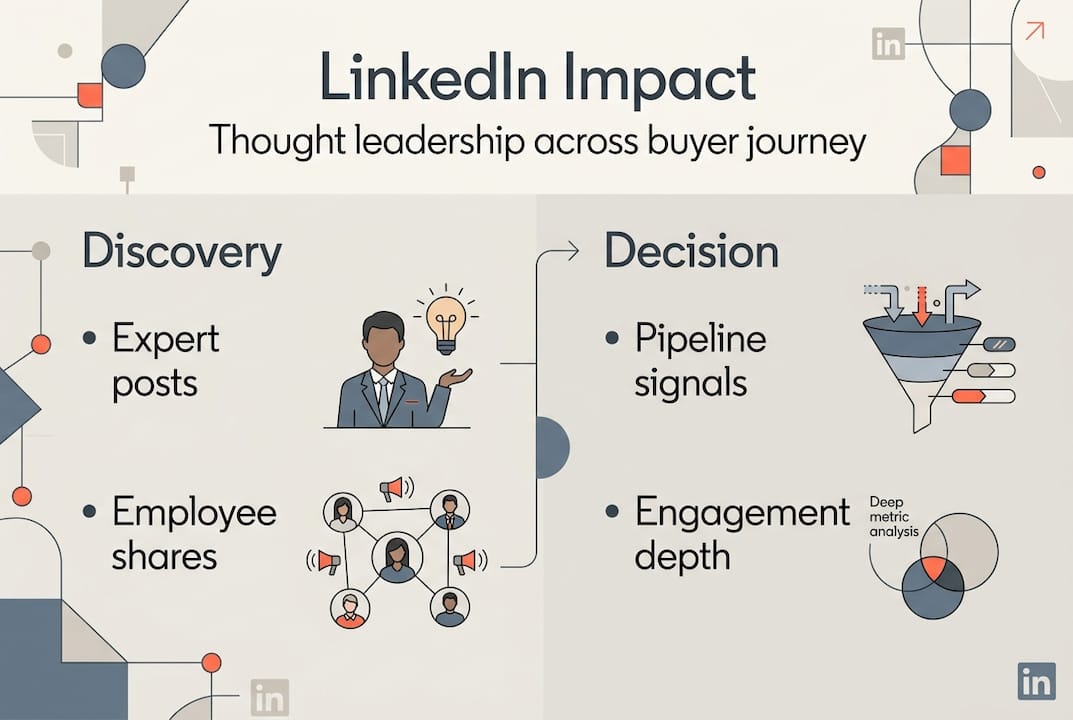
The benefits of LinkedIn marketing extend to every stage of the buyer journey. Early-stage prospects discover your perspective through shared insights. Mid-funnel evaluators assess your depth of knowledge through detailed analysis. Late-stage decision makers validate their choice by engaging directly with the experts behind your solutions. Thought leadership creates touchpoints that traditional demand generation cannot replicate.
Crafting authentic and credible thought leadership content
Authentic thought leadership requires a structured approach to capturing and sharing expertise. The POV plus Methodology plus Proof framework provides a repeatable template. Start with a clear point of view that challenges conventional thinking or offers fresh perspective. Detail the methodology or process that supports your position. Conclude with proof through data, case examples, or documented outcomes. This structure transforms opinions into credible insights backed by evidence.
Content creation becomes sustainable when you systematically capture daily learnings. After client calls, project milestones, or strategy sessions, document one key takeaway worth sharing. This practice builds a reservoir of authentic material drawn from real work rather than forced ideation sessions. Each insight becomes a standalone post, then gets repurposed into video commentary, carousel breakdowns, or article deep dives.
The LinkedIn algorithm favors specific formats that drive meaningful interaction. Short posts generate quick engagement and broad reach. Articles allow comprehensive exploration of complex topics. Questions spark discussion and community participation. Vary your format based on content depth and engagement goals rather than defaulting to a single approach.

Authenticity manifests through texture that AI-generated content consistently lacks. Share the friction points in implementing your methodology. Use qualifiers that acknowledge limitations or context dependencies. Discuss failures and pivots that shaped your current approach. These elements signal genuine experience and build trust that polished corporate messaging cannot achieve.
Employee advocacy and Thought Leader Ads extend your reach strategically. When team members share insights from personal profiles, content reaches new networks with the credibility boost of peer recommendation. Thought Leader Ads amplify high-performing organic posts to targeted audiences, combining authentic voice with paid precision. Both tactics maximize your brand strategy by distributing expertise across multiple touchpoints.
Pro Tip: Create a simple system to capture insights immediately after valuable conversations or project breakthroughs. Voice memos, quick notes, or shared team channels prevent the loss of authentic material that emerges in the flow of work. Raw captures translate into compelling posts more effectively than brainstormed content divorced from real experience.
Consistency matters more than perfection. Publishing regular insights builds audience expectation and algorithmic favor. The roles of influencers in advertising demonstrate how sustained presence creates cumulative authority. Focus on maintaining a steady cadence of valuable posts rather than waiting for breakthrough ideas. Incremental expertise compounds into recognized thought leadership over time.
Effective content engages LinkedIn audiences by addressing their specific challenges and questions. Monitor comments and direct messages to understand what resonates. Adapt your content mix based on which topics generate substantive discussion versus passive consumption. Let audience response guide your evolution rather than rigidly following a predetermined content calendar.
Navigating challenges and myths in LinkedIn thought leadership
AI-generated content floods LinkedIn feeds with posts that mimic thought leadership without delivering substance. These posts lack authentic markers like hedging language, transparent failures, and contextual nuance. They present polished insights divorced from the messy reality of implementation. Audiences increasingly recognize and dismiss this artificial expertise, making authentic voice a competitive advantage.
Fragile thought leadership reveals itself through response to dissent. Leaders who block critics or ignore challenging questions signal insecurity rather than confidence. Genuine expertise welcomes debate as an opportunity to refine thinking and demonstrate depth. The willingness to engage with disagreement builds credibility more effectively than curating an echo chamber of agreement.
Several myths delay or derail thought leadership efforts. The belief that you need an ultra-specific niche before starting prevents valuable generalist insights from reaching audiences. The assumption that personal and brand strategies must remain completely separate ignores the synergy between individual expertise and organizational authority. The fear that any misstep will permanently damage reputation overstates risk and understates audience forgiveness for authentic mistakes.
True thought leadership shapes how audiences think about problems and solutions. It introduces frameworks, challenges assumptions, and provides evidence-based perspectives that shift understanding. Motivational platitudes and generic advice may generate engagement but fail to establish genuine authority or influence decision making.
Balancing volume and quality requires understanding their relationship. High posting frequency without substantive insight creates noise that audiences tune out. Perfectionism that delays sharing until every post achieves breakthrough status limits your presence and learning. The optimal approach publishes consistently valuable content, with occasional deeper pieces that showcase your full expertise. Not every post needs to revolutionize thinking, but each should add genuine value.
The personal branding and B2B influence connection demonstrates how individual credibility transfers to organizational reputation. When executives and team members build authentic thought leadership, they create multiple entry points for audience engagement. This distributed authority proves more resilient and scalable than relying solely on corporate channels or a single spokesperson.
Thought leadership faces criticism when volume overwhelms substance. The proliferation of self-proclaimed experts posting motivational content without depth dilutes the term’s meaning. Distinguish your approach by prioritizing insight over inspiration, methodology over motivation, and evidence over assertion. Let the quality of your thinking speak louder than the frequency of your posting.
Measuring and maximizing impact of LinkedIn thought leadership
Engagement metrics reveal which content types resonate most strongly with your audience. Analysis of LinkedIn posts shows interpersonal and observance content generates higher engagement than purely business-focused material. Posts sharing team experiences, industry observations, and professional development insights spark more comments and reactions than product announcements or corporate updates. Track performance by content category to optimize your mix.
Pipeline indicators provide more meaningful ROI measurement than vanity metrics. Direct messages requesting consultation, profile visits from target accounts, and inquiries mentioning specific posts demonstrate thought leadership’s business impact. These signals connect content directly to revenue opportunities in ways that likes and shares cannot. Building pipeline through thought leadership requires tracking these deeper engagement markers alongside surface-level metrics.
Repurposing successful content extends its lifespan and reach. Transform high-performing posts into short video commentary that adds visual dimension. Break down complex insights into carousel posts that guide audiences through multi-step frameworks. Expand popular topics into long-form articles that establish comprehensive authority. Each format reaches different audience segments and consumption preferences.
Employee and micro-influencer amplification multiplies your thought leadership impact. When team members share and add commentary to organizational insights, content reaches new networks with peer credibility. Partnerships with vetted LinkedIn influencers extend reach into established communities. These amplification strategies work synergistically with your owned content efforts.
| Metric Type | What to Track | Why It Matters |
|---|---|---|
| Engagement depth | Comments, conversation threads, meaningful reactions | Indicates content sparked thinking versus passive consumption |
| Pipeline signals | Direct messages, profile visits from target accounts, consultation requests | Connects thought leadership directly to business opportunities |
| Audience growth | Follower increases, connection requests from ideal customer profiles | Shows expanding influence within target market |
| Content performance | Post reach, engagement rate by content type, optimal posting times | Guides content strategy optimization and format decisions |
| Attribution | Deals influenced by content engagement, sales cycle acceleration | Demonstrates measurable revenue impact of thought leadership |
Pro Tip: Create a simple tracking system that logs direct business inquiries and their connection to specific content. When prospects mention a post in initial conversations, note which topic and format drove engagement. This qualitative data reveals what truly influences your pipeline beyond algorithmic metrics.
Measuring LinkedIn ROI requires connecting platform activity to business outcomes. Implement UTM parameters on shared links to track website visits from LinkedIn. Use CRM integration to tag opportunities that originated from content engagement. Calculate customer acquisition cost for LinkedIn-sourced deals separately from other channels. These measurements justify continued investment and guide resource allocation.
Continuous improvement follows a structured approach:
- Analyze performance data monthly to identify top-performing content themes and formats
- Survey your audience periodically to understand what challenges they want addressed
- Test new content types and posting schedules systematically rather than randomly
- Document learnings from both successes and failures to refine your approach
- Align marketing goals with measurable outcomes to maintain strategic focus
Sustaining momentum requires balancing consistency with evolution. Maintain regular publishing cadence while experimenting with new formats and topics. Let data guide your direction without becoming enslaved to metrics. The most successful thought leaders combine disciplined execution with creative exploration, building authority through both reliability and innovation.
Leverage Kawaak to launch and scale your LinkedIn thought leadership campaigns
Building effective thought leadership requires consistent execution across content creation, employee advocacy, and influencer partnerships. Kawaak simplifies this complexity by connecting B2B brands with vetted LinkedIn creators who amplify your expertise to engaged professional audiences.
Our platform streamlines campaign management from creator discovery through performance tracking, letting you focus on strategy while we handle execution logistics. Launch B2B influencer campaigns that extend your thought leadership reach through trusted voices your audience already follows. Discover how Kawaak transforms LinkedIn thought leadership from time-intensive effort into scalable competitive advantage. Start your first campaign today and measure the pipeline impact of strategic creator partnerships.
FAQ
What is thought leadership on LinkedIn and why is it important?
Thought leadership on LinkedIn means sharing expert insights and perspectives that shape how your audience thinks about industry challenges and opportunities. It builds credibility by demonstrating deep knowledge through consistent, valuable content rather than promotional messaging. For B2B marketers, this credibility translates directly into pipeline influence as decision makers evaluate vendors based on demonstrated expertise. The professional context of LinkedIn makes it the ideal platform where thought leadership drives measurable business outcomes.
How can B2B marketers create authentic thought leadership content on LinkedIn?
Use the POV plus Methodology plus Proof framework to structure insights backed by evidence and real experience. Capture daily learnings from client work, project outcomes, and strategy sessions to build a reservoir of authentic material. Share the friction points, qualifiers, and failures that signal genuine expertise rather than polished corporate messaging. Leverage LinkedIn’s favored formats like 150-300 word posts for quick insights and 800-plus word articles for comprehensive analysis.
What metrics indicate successful thought leadership impact on LinkedIn?
Track engagement depth through comments and substantive reactions rather than passive likes. Monitor pipeline signals including direct messages from prospects, profile visits by target accounts, and consultation requests mentioning specific content. Measure follower growth among ideal customer profiles and connection requests from decision makers. Most importantly, track attributed revenue by logging which deals were influenced by content engagement and how thought leadership accelerates sales cycles.
What common pitfalls should be avoided when building LinkedIn thought leadership?
Avoid AI-generated content that lacks the texture of authentic experience like hedging language and transparent failures. Never block or dismiss dissenting opinions, as fragile responses to criticism erode credibility faster than controversial positions. Reject myths requiring ultra-niche specialization before starting or completely separating personal and brand strategies. Balance posting volume with substantive insight rather than choosing either extreme. Focus on shaping audience thinking through frameworks and evidence instead of motivational platitudes that generate engagement without establishing authority.