
Most marketers treat hashtags as discovery tools on LinkedIn, expecting followers to find content by clicking or following tags. That’s not how they work. Hashtags on LinkedIn function as categorization signals and SEO keywords that help the algorithm distribute your content to relevant audiences. When used strategically, they boost brand visibility and campaign engagement significantly. This guide reveals evidence-based tactics to maximize hashtag impact in your 2026 LinkedIn campaigns, from selection strategies to placement optimization and performance measurement.
Table of Contents
- Understanding The Role Of Hashtags In LinkedIn’s Algorithm
- Choosing And Placing Hashtags For Maximum LinkedIn Campaign Impact
- Measuring Effectiveness: Hashtag Impact On LinkedIn Campaign Results
- Advanced Hashtag Tactics For LinkedIn Influencer And B2B Campaigns
- Optimize Your LinkedIn Campaigns With Kawaak
- Frequently Asked Questions
Key takeaways
| Point | Details |
|---|---|
| Hashtags boost algorithmic reach | Posts with hashtags see 12.6% higher engagement and 9% more reach compared to posts without them |
| Niche tags outperform generic ones | Targeted hashtags generate up to 3 times more engagement than broad, high-volume tags |
| Strategic placement matters | Position hashtags at caption end with spacing to maximize algorithm indexing and readability |
| Limit quantity for quality | Use 3 to 5 hashtags per post to avoid algorithm penalties for low-quality content signals |
Understanding the role of hashtags in LinkedIn’s algorithm
Hashtags don’t work like Instagram or Twitter discovery channels on LinkedIn. The platform’s algorithm uses them as categorization signals and SEO keywords to determine which audiences should see your content. When you add a hashtag, LinkedIn embeds it in your post’s URL structure, making it searchable both within the platform and on Google. This dual indexing creates visibility opportunities beyond the LinkedIn feed itself.
Posts tagged with relevant hashtags achieve measurably higher performance. The algorithm interprets hashtags as topic indicators, matching your content with users interested in those subjects. This categorization happens behind the scenes, not through users actively following or clicking hashtag feeds. Think of hashtags as metadata that helps LinkedIn understand what your post is about and who would find it valuable.
The quality and relevance of your hashtags matter more than quantity. LinkedIn’s algorithm prioritizes posts that use specific, accurate tags over those stuffed with generic or irrelevant ones. A brand strategy linkedin posts 2026 approach means selecting hashtags that genuinely describe your content’s core topic and target audience.
Key factors the algorithm evaluates:
- Relevance between hashtag and post content
- Hashtag specificity and niche focus
- Historical engagement rates for chosen tags
- User interest signals in related topics
- Post quality and early engagement velocity
Misusing hashtags creates negative signals. Adding irrelevant tags to chase volume, using banned or spammy hashtags, or exceeding recommended limits can reduce your post’s distribution. The algorithm detects these patterns and may suppress content that appears to game the system.
“The LinkedIn algorithm treats hashtags as trust signals. When your tags accurately reflect content and audience intent, the platform rewards you with expanded reach to users genuinely interested in your topic.”
This technical understanding shifts how you approach hashtag selection. Instead of chasing popular tags, focus on accurate categorization that helps LinkedIn connect your campaign content with the right professional audiences.
Choosing and placing hashtags for maximum LinkedIn campaign impact
The Pyramid Strategy combines three hashtag types to balance reach and targeting. Start with 2 to 3 niche hashtags that describe your specific topic or industry segment. Add 1 broad industry hashtag for wider visibility. Optionally include 1 branded hashtag to track campaign-specific engagement. This structure maximizes algorithmic favorability while maintaining content relevance.

Niche hashtags consistently outperform generic alternatives. A tag like #B2BContentStrategy with 50,000 followers generates higher engagement than #Marketing with 5 million followers because it reaches a more qualified, interested audience. Lower competition means your content surfaces more prominently in those topic feeds, and users following niche tags actively seek specialized information.
Pyramid Strategy implementation:
- Identify 2 to 3 niche hashtags with 10,000 to 100,000 followers that precisely match your content topic
- Select 1 broad industry hashtag with 500,000+ followers for baseline reach
- Create or use 1 branded hashtag for campaign tracking and community building
- Test combinations and monitor which mix drives strongest engagement for your audience
- Rotate underperforming tags based on analytics insights every 2 to 3 campaigns
Hashtag placement directly affects algorithmic indexing. Position your tags at the end of your caption with line breaks for visual separation. This placement ensures LinkedIn’s crawler indexes them while keeping your main message clean and readable. The algorithm scans hashtags regardless of position, but end placement optimizes both technical performance and user experience.
Avoid placing hashtags in comments. While this tactic keeps captions clean, it significantly reduces SEO effectiveness because LinkedIn indexes caption content more heavily than comments. The algorithm treats comment hashtags as secondary signals with lower weight for distribution decisions. For engage linkedin audiences effectively 2026 campaigns, caption placement is non-negotiable.
Limit your selection to 3 to 5 hashtags maximum. Posts exceeding this range trigger algorithm flags for potential spam or low-quality content. LinkedIn’s system interprets excessive tagging as an attempt to game reach rather than genuine categorization. Quality beats quantity every time in hashtag strategy.
Pro Tip: Research competitor posts in your niche to identify which hashtag combinations drive engagement in your industry. Look for patterns in high-performing content, then test similar structures adapted to your specific campaign messaging and audience.
Measuring effectiveness: hashtag impact on LinkedIn campaign results
Data from analyzing 10,000 LinkedIn posts reveals that posts with hashtags see 12.6% higher engagement and 9% more reach compared to posts without any tags. This performance lift applies across industries and content types, making hashtags a fundamental component of campaign optimization rather than an optional tactic. The engagement boost compounds over time as the algorithm learns which audiences respond to your tagged content.
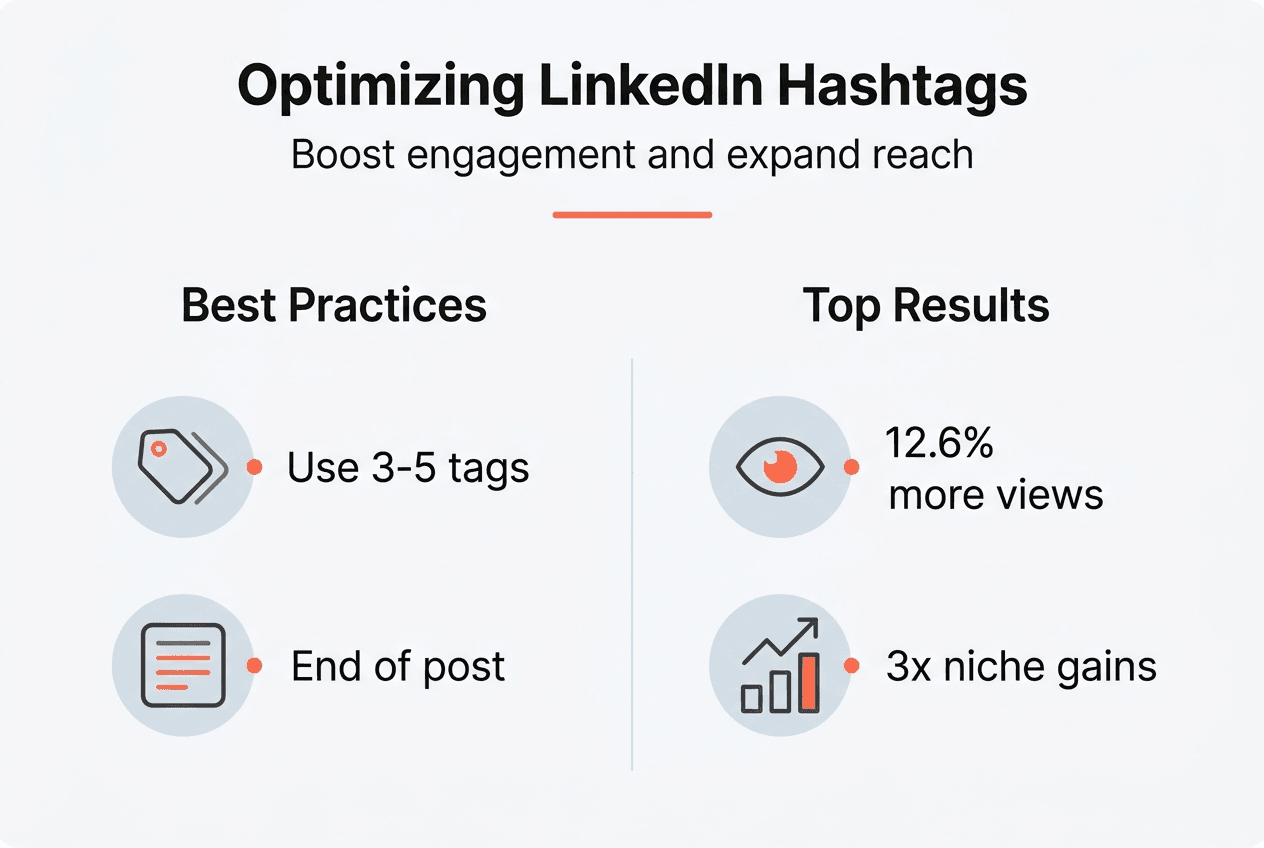
Niche hashtags deliver disproportionate returns. Research shows niche hashtags outperform generic ones by up to 3 times in engagement metrics due to lower competition and higher audience relevance. A campaign using #SaaSGrowthMarketing reaches decision-makers actively interested in that specific domain, while #Business reaches everyone and no one simultaneously. Targeting precision drives conversion quality.
Performance comparison by hashtag type:
| Hashtag Type | Average Engagement Rate | Reach Multiplier | Best Use Case |
|---|---|---|---|
| Niche (10k-100k followers) | 4.2% | 2.8x | Targeted campaigns, thought leadership |
| Broad industry (500k+ followers) | 1.5% | 1.4x | Brand awareness, baseline reach |
| Branded (varies) | 3.8% | 1.2x | Campaign tracking, community building |
| Generic (1M+ followers) | 0.9% | 1.1x | Avoid for B2B campaigns |
Tracking branded hashtags provides campaign-specific intelligence. When you create a unique tag for your campaign, you can monitor all posts using that hashtag to measure user-generated content, influencer participation, and community growth. This data feeds directly into measuring LinkedIn ROI calculations by isolating campaign-attributed engagement from general brand activity.
LinkedIn’s native analytics shows hashtag performance for company pages, but individual users need third-party tools to track detailed metrics. Monitor impressions, engagement rate, click-through rate, and follower growth attributed to each hashtag. Compare performance across campaigns to identify which tags consistently drive results for your specific audience and content style.
Essential tracking metrics:
- Impressions per hashtag to measure reach expansion
- Engagement rate by hashtag type to optimize mix
- Click-through rate on posts with different tag combinations
- Follower acquisition from hashtag-driven discovery
- Conversion attribution for campaign-specific branded tags
Avoid irrelevant or overused generic hashtags that dilute your message. Tags like #Leadership or #Innovation add no targeting value and may actually reduce performance by signaling low content specificity to the algorithm. Every hashtag should serve a strategic purpose, either for reach, targeting, or tracking. Successful LinkedIn posts boost B2B engagement through precise audience matching, not broad scattering.
Pro Tip: Create a hashtag performance spreadsheet tracking engagement rates and reach for each tag you test. After 10 to 15 posts, patterns emerge showing which combinations work best for your audience, allowing data-driven optimization rather than guesswork.
Advanced hashtag tactics for LinkedIn influencer and B2B campaigns
The LinkedIn algorithm flags posts using more than 5 hashtags as potential low-quality content. This threshold reflects the platform’s emphasis on professional, substantive content over promotional spam. Exceeding this limit reduces your post’s distribution regardless of content quality. For B2B and influencer campaigns where reach directly impacts ROI, respecting this boundary is critical.
Early post engagement matters more than hashtag volume for visibility. The algorithm evaluates performance in the first 60 to 90 minutes after publishing. Posts that generate quick engagement from your network receive expanded distribution to secondary and tertiary connections, amplified by hashtag categorization. Focus on publishing when your audience is active and encouraging immediate interaction through compelling content rather than relying solely on hashtag reach.
Advanced optimization tactics:
- Combine hashtag strategy with inbound content that attracts engagement and outbound outreach that seeds initial interactions
- Use branded hashtags consistently across all campaign touchpoints to build recognition and trackable community
- Rotate hashtags every 3 to 4 posts to test performance variations while maintaining core niche tags
- Analyze competitor hashtag strategies in your vertical to identify emerging relevant tags before they become oversaturated
- Coordinate hashtag use across influencer partners to amplify campaign-specific branded tags and create trending signals
For B2B and influencer campaigns, integrate hashtags with broader marketing loops. When master LinkedIn influencer vetting processes identify partners, align on hashtag strategy as part of campaign guidelines. Consistent tag use across sponsored posts, organic brand content, and user-generated responses creates cohesive campaign signals that the algorithm recognizes and rewards with sustained reach.
Branded hashtags serve dual purposes in influencer campaigns. They enable tracking of all campaign-related content while building community around your initiative. Integrate branded hashtags to track engagement and encourage audience participation. When users adopt your branded tag in their own posts, it signals authentic engagement and extends campaign reach organically beyond paid partnerships.
“Sophisticated B2B marketers treat hashtags as one component in a coordinated visibility system. The tags categorize content for algorithmic distribution, while strategic timing, influencer amplification, and engagement tactics ensure the algorithm prioritizes that content for expanded reach.”
Continuous testing separates good hashtag strategy from great performance. Analyze which tags drive engagement, which expand reach to new audiences, and which generate conversions or lead actions. Align marketing goals LinkedIn 520% ROI outcomes by treating hashtags as testable variables in your campaign optimization framework. Rotate underperformers, double down on winners, and stay current with emerging niche tags in your industry.
Optimize your LinkedIn campaigns with Kawaak
Implementing these hashtag strategies becomes significantly easier with the right campaign management tools. Kawaak specializes in LinkedIn campaign management that helps you track branded hashtags, measure engagement across influencer partnerships, and optimize content distribution for maximum visibility. Our platform connects brands with vetted LinkedIn creators who understand how to leverage hashtag strategies for authentic audience engagement.
Ready to launch your first optimized campaign? Kawaak’s B2B influencer campaigns LinkedIn solution streamlines influencer vetting, campaign coordination, and performance tracking so you can focus on strategy while we handle execution. Transform these hashtag insights into measurable results with tools designed specifically for LinkedIn’s unique algorithm and professional audience.
Frequently asked questions
What are the best types of hashtags to use in LinkedIn campaigns?
Niche hashtags with 10,000 to 100,000 followers provide the highest engagement because they reach qualified audiences with genuine interest in your topic. Combine 2 to 3 niche tags with 1 broad industry hashtag for balanced reach. Add an optional branded hashtag to track campaign-specific engagement and build community around your initiative. Quality and relevance always outweigh quantity for engage LinkedIn audiences effectively results.
How many hashtags should I use per LinkedIn post for best results?
Use between 3 to 5 hashtags per post for optimal algorithmic performance. This range provides sufficient categorization signals without triggering spam filters. Posts exceeding 5 hashtags may be flagged as low-quality content by LinkedIn’s algorithm, reducing distribution. Focus on selecting the most relevant tags rather than maximizing quantity.
Where should hashtags be placed in LinkedIn posts or campaigns?
Place hashtags at the end of your post caption with line breaks for visual separation and readability. This positioning ensures LinkedIn’s algorithm indexes them effectively while keeping your main message clean. Avoid placing hashtags in comments because the algorithm weights caption content more heavily for distribution decisions, reducing the SEO effectiveness of comment-based tags.
Can branded hashtags help in measuring campaign success on LinkedIn?
Branded hashtags enable precise tracking of campaign-specific engagement and user-generated content across all participants. They help you measure reach, monitor influencer partner performance, and calculate ROI by isolating campaign-attributed activity from general brand engagement. Consistent use of branded tags also builds community and encourages audience participation, extending campaign impact beyond initial paid partnerships. Track these metrics to optimize successful LinkedIn posts boost B2B engagement outcomes.
Recommended
- How to engage LinkedIn audiences effectively in 2026 – Kawaak
- Maximize your brand strategy with LinkedIn posts in 2026 – Kawaak
- Master your LinkedIn workflow for marketing success in 2026 – Kawaak
- LinkedIn Marketing Benefits 2026: 80% B2B Leads & 2x CVR – Kawaak
- Angajam Social Media Manager | Remote | Devrika