
Many marketing professionals think employer branding on LinkedIn is just about posting job openings or running recruitment ads. That’s a costly misconception. True employer branding leverages LinkedIn’s full suite of tools to build your company’s reputation, showcase your culture, and attract top talent organically. For B2B companies competing for specialized marketing and technical professionals, a strategic approach to employer branding can mean the difference between a pipeline of qualified candidates and crickets. This guide breaks down exactly what employer branding on LinkedIn means, the strategies that work for B2B marketing teams, and how to measure real impact.
Table of Contents
- Key takeaways
- Understanding employer branding on LinkedIn
- Key strategies to build your employer brand on LinkedIn
- Measuring success and avoiding pitfalls in LinkedIn employer branding
- Integrating employer branding with your broader LinkedIn marketing
- Boost your LinkedIn employer branding with Kawaak
- Frequently asked questions about employer branding on LinkedIn
Key Takeaways
| Point | Details |
|---|---|
| Multi tool approach | Employer branding on LinkedIn uses company pages, career pages, job postings, sponsored content, and employee advocacy to build reputation and attract top talent, not just post openings. |
| Authentic stories | Real employee stories and transparent information about growth paths outperform generic corporate messaging. |
| Employer versus company brand | Employer brand targets potential hires while company brand speaks to customers, and they should align but serve different audiences. |
| Quality over volume | Three genuine employee stories per month outperform daily generic posts for engagement. |
| Measure impact | Use analytics to track engagement and ROI and guide ongoing optimization. |
Understanding employer branding on LinkedIn
Employer branding on LinkedIn is the strategic use of LinkedIn’s tools and features to position an organization as an attractive employer. It’s not a single campaign or a quarterly initiative. It’s an ongoing effort to communicate your company’s values, culture, work environment, and career opportunities to potential candidates who are already active on the platform.
For B2B marketing professionals, this means thinking beyond traditional recruitment advertising. You’re building a narrative that resonates with specialized talent pools, people who care about professional development, company mission, and the caliber of projects they’ll work on. LinkedIn offers several core features specifically designed for this purpose.
Essential LinkedIn tools for employer branding:
- Company Pages serve as your organization’s professional home base, showcasing mission, values, and updates
- Career Pages provide dedicated space for culture content, employee testimonials, and open roles
- Jobs postings reach active job seekers with detailed role information and application tracking
- Sponsored Content amplifies your best employer brand stories to targeted professional audiences
- Employee advocacy programs turn your team into authentic brand ambassadors with organic reach
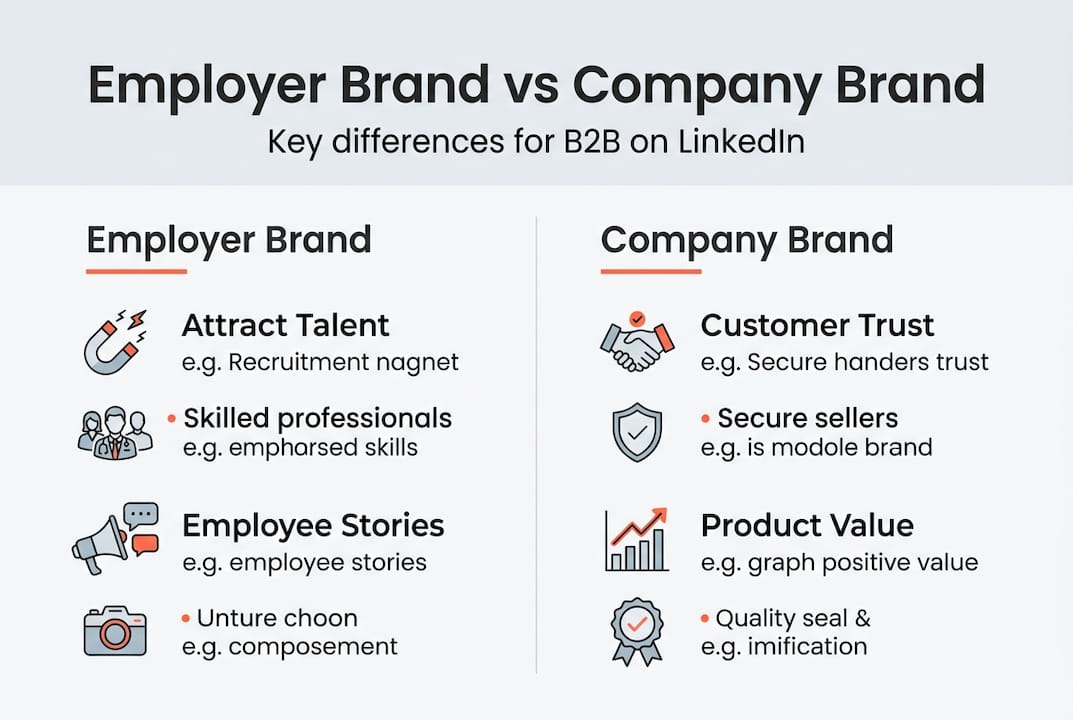
The distinction between employer brand and company brand matters enormously. Your company brand speaks to customers and clients about your products or services. Your employer brand speaks to potential hires about what it’s like to work at your organization. They should align but they serve different audiences with different needs. A software company might position itself as innovative and cutting edge to customers, but its employer brand should highlight collaborative culture, learning opportunities, and work-life balance to attract developers and marketers.
Authenticity is non-negotiable. LinkedIn audiences, especially experienced B2B professionals, can spot corporate speak and generic messaging instantly. They want real stories from real employees, transparent information about growth paths, and honest depictions of your workplace culture. Check out this LinkedIn branding checklist to ensure your foundation is solid.
Pro Tip: Prioritize quality authentic content over volume for stronger engagement. Three genuine employee stories per month will outperform daily generic posts every time.
Key strategies to build your employer brand on LinkedIn
Building an effective employer brand on LinkedIn requires intentional strategy across multiple fronts. B2B companies emphasize detailed postings and aligned HR/marketing storytelling to reach specialized professional audiences.
Start with your Company and Career Pages. These are your foundation. Optimize them with clear descriptions of your culture, commitments to diversity and professional development, and relevant SEO keywords that candidates actually search for. Include high-quality visuals that show your real workspace and team. Update your pages regularly with company news, awards, and milestones that reinforce your employer value proposition.
Content strategy essentials:
- Post authentic employee stories that highlight individual career journeys and achievements
- Share behind-the-scenes content showing day-to-day work life and team interactions
- Feature leadership perspectives on industry trends and company direction
- Celebrate team wins, project launches, and professional development milestones
- Create video content showcasing your office environment and team culture
Employee advocacy programs amplify your reach exponentially. When your employees share company content and their own professional experiences, they tap into networks you can’t reach through corporate channels alone. Their endorsements carry more weight because they’re perceived as authentic and unbiased. Provide employees with shareable content, but encourage them to add their own voice and perspective. Tools and platforms exist specifically to facilitate this, making it easy for employees to participate without feeling like they’re doing extra work.

Collaboration between HR and marketing teams is absolutely critical. Marketing brings expertise in messaging, content creation, and campaign management. HR understands the candidate journey, hiring needs, and what makes your culture unique. When these teams work together with shared goals and regular communication, your employer branding becomes cohesive and powerful. Establish shared content calendars, regular sync meetings, and unified metrics to track success.
Strategic amplification tactics:
- Use Traffic Driver ads to promote your best culture content to targeted professional audiences
- Deploy Sponsored Content to boost employee stories and behind-the-scenes posts
- Leverage LinkedIn’s targeting capabilities to reach professionals with specific skills and experience levels
- Test different content formats (video, carousel, single image) to identify what resonates most
- Retarget engaged users with follow-up content that deepens their understanding of your culture
Explore creative LinkedIn campaign ideas to differentiate your employer brand in crowded feeds. Consider how your employer branding fits into your overall LinkedIn workflow for marketing to ensure efficiency and consistency. For broader context on managing complex campaigns, review this guide on digital marketing workflow to see how employer branding integrates with other initiatives.
Pro Tip: Balance paid promotions with organic advocacy to maximize authenticity. If 80% of your employer brand content comes from paid ads, you’ll lose credibility. Aim for a 60/40 split favoring organic employee-generated content.
Measuring success and avoiding pitfalls in LinkedIn employer branding
You can’t improve what you don’t measure. Effective employer branding on LinkedIn requires tracking specific metrics that indicate whether your efforts are actually attracting better talent faster. Strong employer brands save $5,000 per hire and attract 2.3x more top talent, but you need data to prove your program delivers similar results.
Key success metrics to track:
- Hire rate improvements: time from job posting to accepted offer
- Engagement rates on employer brand content (LinkedIn average is 5.20% for company content)
- Application quality scores based on candidate qualifications and fit
- Retention rates of hires who engaged with employer brand content before applying
- Employee referral rates as an indicator of internal brand strength
- Career Page views and follower growth on your Company Page
Benchmark data provides context for your performance. In documented case studies, employer brand influences 41.2% hire rate improvements when implemented strategically. However, only 44% of companies measure employer branding ROI, which means most organizations are flying blind. Don’t be in that majority. Establish baseline metrics before launching new initiatives, then track changes quarterly.
| Common Pitfalls | Best Practices |
|---|---|
| No alignment between HR and marketing strategies | Regular cross-functional meetings and shared KPIs |
| Ignoring employee advocates and their networks | Active employee advocacy programs with recognition |
| Treating employer brand identical to company brand | Separate messaging tailored to candidate audiences |
| Sporadic posting with long gaps in content | Consistent content calendar with minimum posting frequency |
| Only showcasing leadership while ignoring frontline employees | Diverse employee stories across all levels and departments |
| Generic corporate language that feels inauthentic | Real employee voices and specific workplace examples |
Common mistakes undermine even well-intentioned employer branding efforts. The most damaging is failing to align strategy across teams. When marketing runs employer brand campaigns without HR input, messaging often misses the mark on what candidates actually care about. When HR posts jobs without marketing support, content lacks the polish and targeting needed to break through noise.
Another critical mistake is ignoring your existing employees as brand ambassadors. Your team members have networks full of potential candidates with similar skills and interests. When you don’t empower them to share their experiences, you’re leaving massive organic reach on the table. Provide them with content worth sharing and recognition when they do.
“The biggest mistake companies make is confusing their consumer brand with their employer brand. What attracts customers doesn’t necessarily attract employees. You need distinct strategies for each audience.”
Learn more about measuring LinkedIn ROI to connect employer branding metrics to business outcomes. Understanding how to align marketing goals on LinkedIn ensures your employer branding supports broader organizational objectives.
Pro Tip: Use analytics continuously to adjust messaging and tactics for better ROI. Review performance data monthly and be willing to kill underperforming content types or targeting strategies. What worked last quarter might not work this quarter as platform algorithms and audience preferences evolve.
Integrating employer branding with your broader LinkedIn marketing
Employer branding doesn’t exist in a vacuum. For B2B marketing professionals, it’s a critical component of your overall LinkedIn strategy that feeds multiple business objectives simultaneously. Integrate employer branding with consumer branding on LinkedIn for awareness, consideration, and pipeline building that serves both talent acquisition and customer acquisition goals.
Think about the marketing funnel stages and how employer branding touches each one. At the awareness stage, employer brand content introduces your organization to professionals who might become candidates or customers. Strong culture content builds general brand affinity. At the consideration stage, detailed employee stories and workplace insights help candidates evaluate whether your company aligns with their career goals. This same content can influence potential customers by demonstrating your company’s expertise and values.
Employer branding tactics mapped to funnel stages:
- Awareness: Sponsored posts highlighting company culture, values, and mission reach broad professional audiences
- Consideration: Employee testimonials and career development stories help candidates evaluate fit
- Decision: Detailed job postings with clear growth paths and benefits convert interested candidates to applicants
- Retention: Internal content celebrating employee achievements reinforces culture for existing team members
| Employer Branding Tactic | Marketing Funnel Stage | Expected Outcome |
|---|---|---|
| Culture highlight posts | Awareness | Increased Company Page followers and brand recognition |
| Employee story videos | Consideration | Higher engagement rates and Career Page visits |
| Behind-the-scenes content | Consideration | Improved perception of workplace culture |
| Detailed job postings | Decision | More qualified applications per posting |
| Employee advocacy shares | Awareness + Consideration | Expanded reach into new professional networks |
Use LinkedIn ads and Pipeline Builder to nurture both candidate and customer pipelines simultaneously. When you run Sponsored Content promoting your employer brand, you’re not just reaching potential hires. You’re also reaching potential clients who care about working with companies that treat employees well and have strong cultures. This dual benefit makes employer branding one of the most efficient uses of your LinkedIn marketing budget.
Cross-team alignment amplifies impact exponentially. When your consumer marketing team and your employer branding team coordinate messaging, you create a cohesive brand presence that reinforces itself. A potential customer who sees your product content and your culture content on the same day forms a more complete, positive impression than someone who only sees one or the other.
Explore the full range of LinkedIn marketing benefits 2026 to understand how employer branding fits into your overall platform strategy. Learn how to maximize brand strategy LinkedIn by coordinating employer and consumer brand messaging. For broader social selling context, review these social selling essentials to see how relationship building applies to both sales and recruitment.
Pro Tip: Leverage LinkedIn analytics to map employer branding touchpoints along candidate journey. Track which content types drive Career Page visits, which drive applications, and which correlate with successful hires. Use these insights to optimize your content mix and budget allocation.
Boost your LinkedIn employer branding with Kawaak
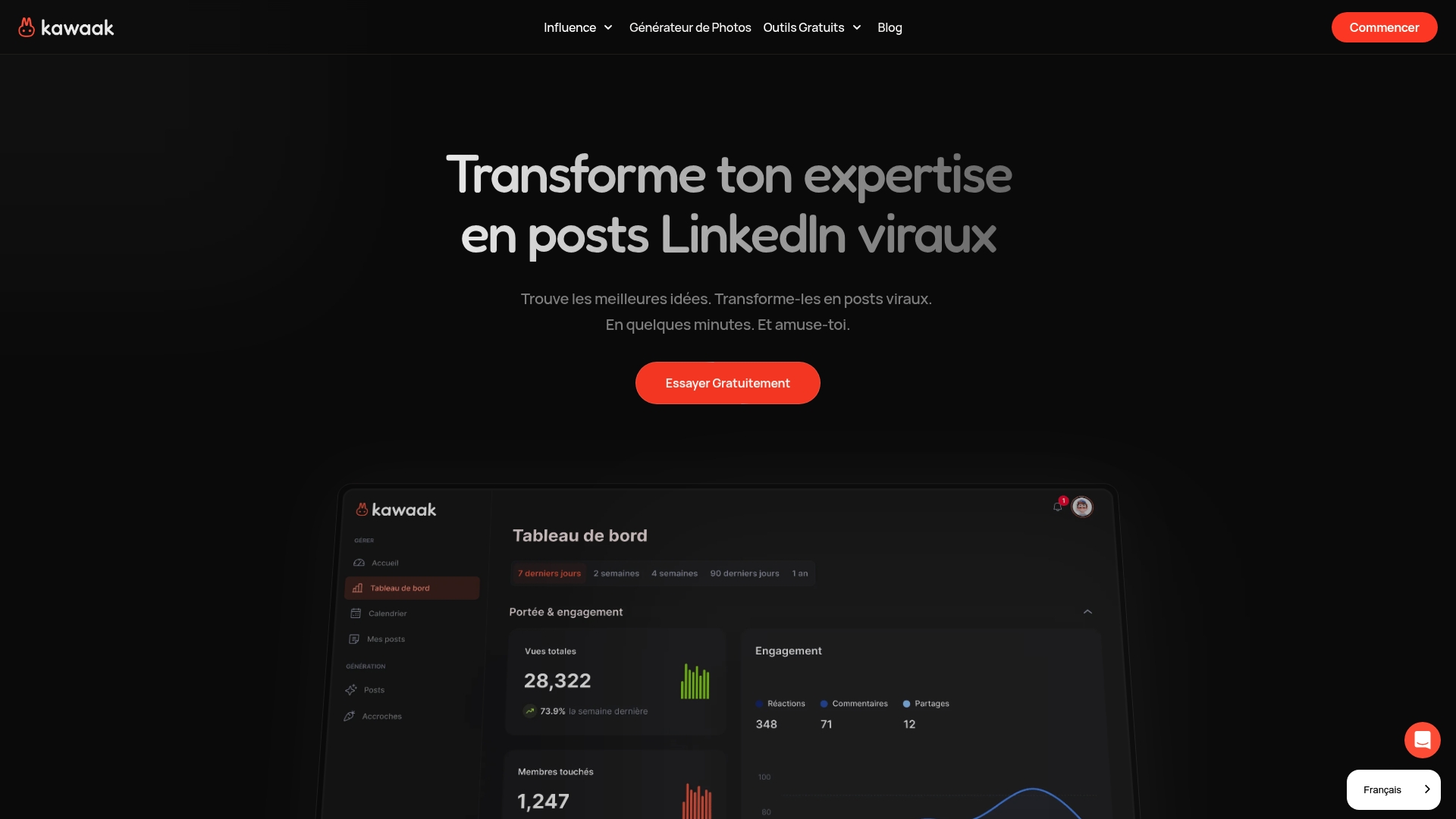
Executing a comprehensive LinkedIn employer branding strategy requires coordination across teams, consistent content creation, and ongoing optimization. That’s where Kawaak comes in. Our platform helps marketing professionals design, launch, and track LinkedIn employer branding campaigns that actually move the needle on talent attraction.
Kawaak integrates employee advocacy and sponsored content seamlessly, making it easy to amplify authentic employee stories while maintaining brand consistency. You get actionable insights into what content resonates most with your target talent pools, allowing you to continuously refine your approach for better results.
Whether you’re building your employer brand from scratch or optimizing an existing program, Kawaak provides the tools and analytics you need to compete for top talent in competitive B2B markets. Explore Kawaak LinkedIn campaigns to see how we help companies like yours turn LinkedIn into a talent magnet. Visit the Kawaak homepage to learn more about our platform and get started.
Pro Tip: Combine Kawaak’s platform with your HR/marketing efforts for best results. The tool handles campaign execution and analytics, freeing your teams to focus on strategy and authentic storytelling.
Frequently asked questions about employer branding on LinkedIn
What are the top LinkedIn features for employer branding?
Company Pages serve as your professional home base, Career Pages showcase culture and opportunities, and Sponsored Content amplifies your best stories to targeted audiences. Employee advocacy programs leverage your team’s networks for organic reach. Together, these tools create a comprehensive employer brand presence.
How can small teams manage employer branding effectively on LinkedIn?
Focus on employee advocacy and authentic storytelling rather than trying to produce high volumes of polished content. Encourage team members to share their experiences in their own words. Use scheduling tools to maintain consistency without overwhelming your resources. Quality beats quantity every time.
What metrics indicate LinkedIn employer branding success?
Track engagement rates on employer brand content, time to hire for open positions, application quality scores, and retention rates of new hires. Also monitor Career Page views and Company Page follower growth. These metrics together show whether your employer brand is attracting better talent faster.
How to align HR and marketing teams for employer branding?
Establish regular communication through weekly or biweekly sync meetings. Create shared content calendars that both teams contribute to and review. Define unified success metrics that both teams are accountable for. When HR and marketing share goals and processes, employer branding becomes far more effective.
Is paid promotion necessary for employer branding on LinkedIn?
Paid promotion enhances reach and allows precise targeting of professionals with specific skills and experience. However, it should complement organic efforts rather than replace them. The most effective employer brands use a balanced approach with roughly 60% organic employee-generated content and 40% strategically promoted posts.
Recommended
- What is LinkedIn sponsored content? 2026 B2B guide – Kawaak
- LinkedIn branding checklist 2026: optimize your profile – Kawaak
- Personal branding on LinkedIn for B2B influence 2026 – Kawaak
- Creative LinkedIn campaign ideas for B2B marketing success – Kawaak
- The 6 golden rules of email prospecting (also valid for Linkedin)