
TL;DR:
- B2B marketers increasingly use thought leaders to build trust and generate pipeline results.
- Micro-influencers offer high engagement and ROI, especially in niche audiences, outperforming top executives.
- Authentic collaboration and strategic pairing of micro-influencers and executives enhance B2B brand authority.
Influencer marketing is not a B2C-only game. 65% of B2B marketers already use or plan to use B2B influencers, and the brands seeing the strongest pipeline results are those betting on thought leaders, not just ad spend. If you’re a B2B marketer or brand manager trying to cut through the noise on LinkedIn, this article gives you a clear framework: who thought leaders are, why they move the needle, how to find the right ones, and how to structure collaborations that actually deliver ROI. No fluff, just actionable strategy.
Table of Contents
- What is a thought leader and why do they matter for B2B?
- How leveraging thought leaders amplifies B2B results on LinkedIn
- Best practices for finding and engaging the right thought leaders
- Comparing micro-influencers vs. top executives as thought leaders
- What most B2B leaders miss about thought leadership collaborations
- Take your B2B influencer marketing to the next level
- Frequently asked questions
Key Takeaways
| Point | Details |
|---|---|
| Thought leaders drive results | B2B brands gain trust, authority, and better engagement through thought leadership collaborations. |
| LinkedIn amplifies impact | Leveraging thought leaders on LinkedIn offers higher ROI and targeted reach for B2B campaigns. |
| Micro-influencers excel in B2B | These influencers can provide up to 5.5x return on ad spend and connect with niche decision-makers. |
| Effective partnerships require strategy | Vet for authentic alignment and follow a structured approach for long-term results. |
What is a thought leader and why do they matter for B2B?
A thought leader is not simply someone with a large following or a flashy job title. In a B2B context, a thought leader is a recognized expert whose insights, opinions, and perspectives actively shape how peers and decision-makers think about an industry, a challenge, or a solution. They earn credibility through consistent, substantive content, not through self-promotion.
Thought leaders in B2B typically fall into three categories:
- Executives and founders who share strategic vision and organizational experience
- Subject matter experts such as analysts, consultants, or practitioners with deep domain knowledge
- Micro-influencers who have built tight, highly engaged niche communities around specific topics
Why does this matter for your marketing strategy? Because B2B purchase decisions are high-stakes, slow-moving, and deeply relational. A CFO evaluating a $200,000 software investment is not going to be swayed by a banner ad. They are going to trust a peer, a respected voice in their network, or an expert they have followed for months. That is exactly where thought leaders operate.
“In B2B, trust is the currency that closes deals. Thought leaders are the ones printing it.”
The shift is already happening at scale. B2B marketers are rapidly adopting thought leadership and influencer strategies as core brand-building tools, not experimental side projects. And platforms like LinkedIn are where this trust is being built in real time.
When you invest in LinkedIn thought leadership, you are not just buying reach. You are buying credibility by association. The thought leader’s audience already trusts them. When they speak about your brand, that trust transfers. This is why CMOs use LinkedIn influencers as a strategic growth lever, not a vanity metric.
Building credibility with thought leader partnerships takes time and alignment, but the compounding effect on brand authority is unlike almost any other B2B marketing channel.
How leveraging thought leaders amplifies B2B results on LinkedIn
LinkedIn is the undisputed home of B2B decision-makers. With over one billion members and a feed algorithm that rewards expertise and engagement, it is the ideal environment for thought leadership to thrive. When a recognized voice in your industry posts about your product, solution, or category, it lands differently than a sponsored ad.
Here is what the data shows about the actual impact:
| Content type | Average engagement rate | ROAS benchmark |
|---|---|---|
| Brand account posts | 0.5% to 1% | 1x to 2x |
| Executive thought leaders | 2% to 4% | 2x to 3x |
| Micro-influencer posts | 4% to 8% | 3.5x to 5.5x |
Micro-influencers deliver 3.5 to 5.5x ROAS for B2B marketers, outperforming brand accounts by a wide margin. The reason is simple: authenticity. When a niche expert with 8,000 highly engaged followers recommends a tool, their audience listens because they trust the source.
🎯 Practical results you can expect from thought leader collaborations on LinkedIn:
- Higher content reach without paid amplification
- Stronger brand recall among decision-makers in long buying cycles
- Increased inbound inquiries from warm, pre-educated prospects
- Shorter sales cycles because trust is already established before the first call
To identify LinkedIn influencers who can drive these outcomes, you need to go beyond follower counts. Look at comment quality, audience seniority, and posting consistency.
Pro Tip: Encourage thought leaders to use LinkedIn’s native features, specifically newsletters, document posts, and short-form video, rather than just text updates. These formats receive preferential algorithmic treatment and generate significantly higher dwell time, which means your brand message gets more exposure per post.
Understanding LinkedIn creators’ influence on buyers is critical before you allocate budget. The right creator in the right niche can accelerate your pipeline faster than a six-month content marketing push.
Best practices for finding and engaging the right thought leaders
Knowing that thought leaders work is one thing. Knowing how to find and activate the right ones for your brand is where most B2B marketers struggle. Here is a proven framework to get it right.
Step 1: Define your campaign objective first. Are you building brand awareness in a new vertical? Generating qualified leads? Establishing authority in a competitive category? Your objective determines the type of thought leader you need and what success looks like.
Step 2: Vet for audience fit, not just follower size. Use LinkedIn’s search filters to find creators posting in your niche. Check their comment sections. Are the commenters senior decision-makers? Are conversations substantive? A creator with 5,000 engaged followers in your exact target segment is worth more than one with 50,000 passive followers.
Step 3: Assess content authenticity. Review the last 30 posts. Do they share original perspectives or just reshare others’ content? Authentic thought leaders have a consistent point of view. That consistency is what makes their endorsement credible.
Step 4: Craft a personalized outreach pitch. Generic partnership requests get ignored. Reference a specific post they wrote. Explain why your brand aligns with their audience’s challenges. Lead with value, not budget.
Step 5: Structure the collaboration with clear mutual benefit. Define deliverables, creative freedom, and success metrics upfront. The best partnerships feel like co-creation, not a transaction.
Pitfalls to avoid:
- Over-indexing on follower count while ignoring engagement quality
- Providing overly scripted briefs that strip away the creator’s authentic voice
- Failing to give thought leaders enough context about your product’s real value
- Treating the collaboration as a one-off rather than building a longer-term relationship
65% of B2B marketers are already investing here. To stay competitive, your influencer identification process needs to be systematic, not ad hoc. Pair that with strong LinkedIn content tips to brief creators effectively, and you will see measurably better results.
Pro Tip: Explore collaborative leadership strategies when structuring your partnerships. Thought leaders who feel like genuine collaborators, not paid mouthpieces, produce content that resonates far more deeply with their audience.
Comparing micro-influencers vs. top executives as thought leaders
Not all thought leaders serve the same strategic purpose. Choosing between a micro-influencer and a top executive depends entirely on what you are trying to achieve. Here is how they compare:
| Dimension | Micro-influencers | Top executives |
|---|---|---|
| Audience size | 1,000 to 50,000 | 50,000 and above |
| Engagement rate | High (4% to 8%) | Moderate (1% to 3%) |
| Content authenticity | Very high | Moderate to high |
| Brand authority signal | Niche credibility | Broad authority |
| Cost | Lower | Higher |
| Best use case | Lead gen, niche trust | Brand positioning, PR |
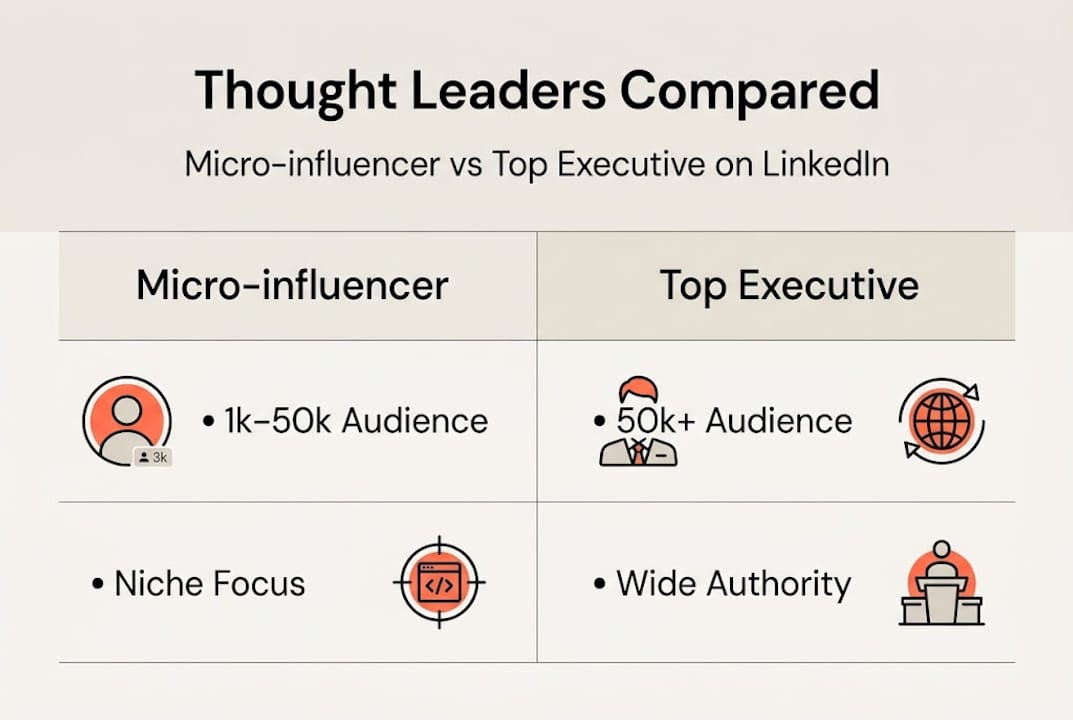
Micro-influencers deliver 3.5 to 5.5x ROAS because their audiences are self-selected around specific interests. When a cybersecurity expert with 12,000 followers recommends a security tool, every one of those followers is a potential buyer.
When to prioritize micro-influencers:
- You are targeting a specific niche or job function
- You need high engagement and conversion over raw reach
- Budget is limited and ROI accountability is critical
- You want authentic, conversational content that does not feel like an ad
When to amplify with top executives:
- You are launching into a new market and need immediate credibility
- Your target audience includes C-suite buyers who respond to peer-level voices
- You are building brand authority for a long sales cycle product
“The smartest B2B brands are not choosing between micro-influencers and executives. They are using both, at different stages of the funnel.”
Leveraging LinkedIn networks strategically means mapping thought leader types to funnel stages. Micro-influencers drive awareness and consideration. Executives validate and accelerate decisions. Together, they create a full-funnel thought leadership engine.

Explore how LinkedIn strategic partnerships can be structured to maximize both types of collaborations. The development process for leaders also offers useful frameworks for evaluating leadership credibility when vetting potential partners.
What most B2B leaders miss about thought leadership collaborations
Here is the uncomfortable truth: most B2B brands approach thought leader partnerships the wrong way. They obsess over reach metrics, negotiate post volume, and then wonder why results are underwhelming. The problem is not the channel. It is the mindset.
The brands generating exponential ROI from these collaborations treat thought leaders as genuine partners, not rented voices. They co-create content, share audience insights, and build campaigns that serve the creator’s community first and the brand second. That inversion is what makes the content land.
Another missed opportunity is cross-departmental storytelling. Marketing, sales, and product teams each have unique narratives that thought leaders can amplify. Siloing these efforts under one campaign brief kills the richness that makes thought leadership compelling.
💡 Explore creative LinkedIn campaign ideas that go beyond the standard sponsored post. Joint webinars, co-authored LinkedIn articles, and collaborative video series are dramatically underused formats that generate far more trust and engagement than a single promoted post ever will.
Treat thought leadership as a relationship investment, not a media buy. The brands that figure this out early will own the conversation in their category.
Take your B2B influencer marketing to the next level
You now have a clear picture of what makes thought leader collaborations work on LinkedIn: the right type of creator, a systematic identification process, authentic co-creation, and a strategy that maps to your funnel stage. The next step is putting it into practice.
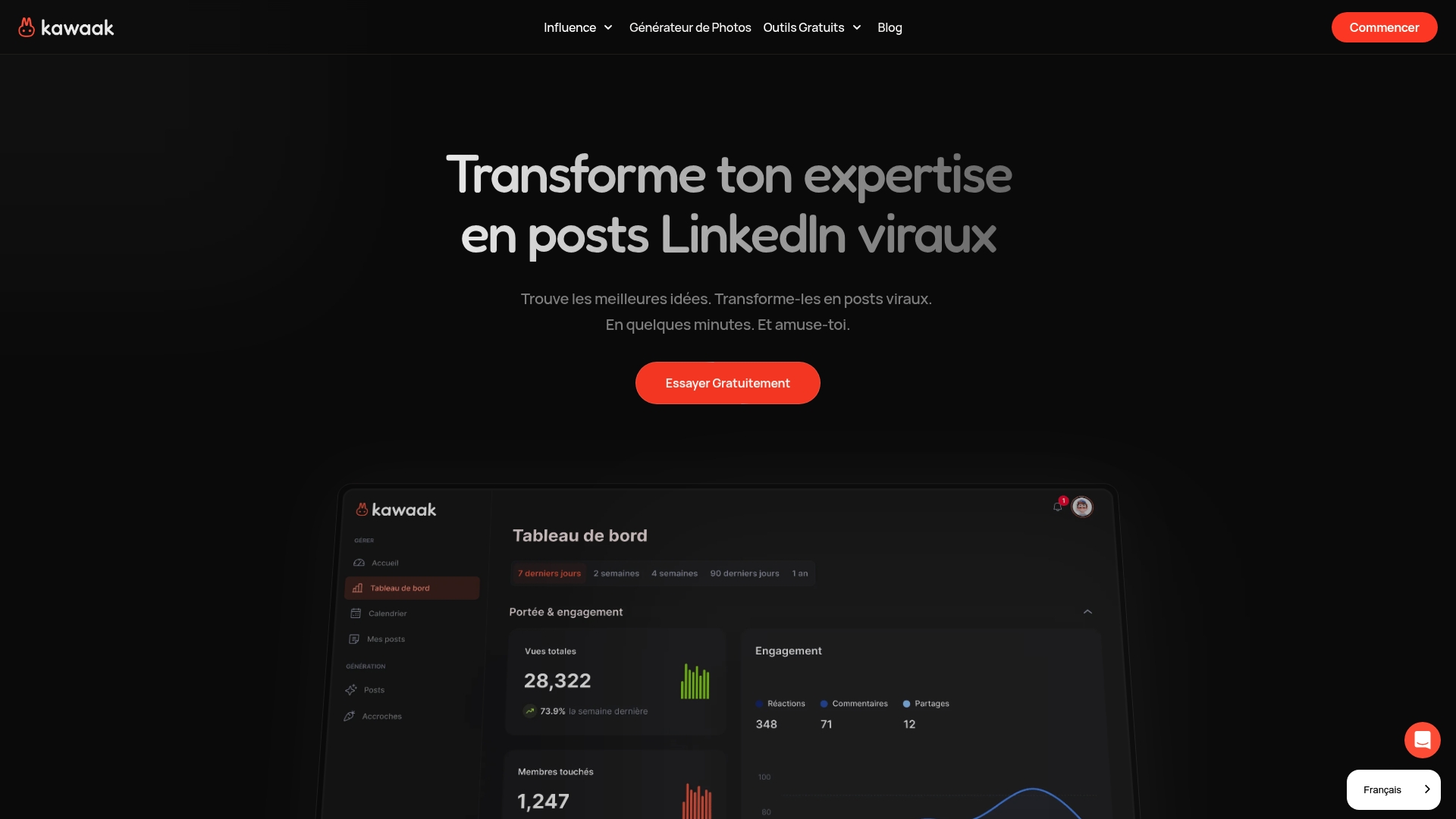
Kawaak is built specifically for B2B brands that want to run influencer marketing campaigns on LinkedIn at scale. The platform connects you directly with LinkedIn creators who are ready to sponsor content, so you can identify, vet, and manage thought leader partnerships from a single place. No more manual outreach spreadsheets or guesswork on creator fit. If you are ready to turn thought leadership into a measurable growth engine, Kawaak gives you the infrastructure to do it efficiently and confidently.
Frequently asked questions
Why are thought leaders important for B2B marketing?
Thought leaders build trust and authority with decision-makers, and 65% of B2B marketers are already investing in these partnerships to drive brand engagement and pipeline growth.
What results can brands expect from collaborating with micro-influencers?
Brands working with B2B micro-influencers on LinkedIn can expect 3.5 to 5.5x ROAS, significantly outperforming standard brand account content in both engagement and conversion rates.
How can marketers identify authentic thought leaders on LinkedIn?
Focus on comment quality, posting consistency, and audience seniority rather than follower count alone — authentic thought leaders have a clear, consistent point of view and generate substantive conversations in their niche.
Should brands partner with micro-influencers or top executives for B2B campaigns?
Micro-influencers deliver higher engagement and niche credibility, making them ideal for lead generation, while top executives signal broad authority and work best for brand positioning or reaching C-suite audiences.