
TL;DR:
- Niche micro-influencers with engaged audiences outperform large followers for B2B visibility.
- Authentic, co-created content builds trust and pipeline better than one-off sponsored posts.
- Measuring lead conversion and CRM entries is essential for evaluating real business impact.
Most B2B marketing professionals assume that bigger reach equals better results on LinkedIn. That assumption is costing mid-sized companies real pipeline. The truth is that niche influencer collaborations, built around authentic engagement and co-created content, consistently outperform broad, high-follower campaigns. Micro-influencers over large follower counts deliver stronger ROI precisely because their audiences are tighter, more relevant, and more likely to act. This article breaks down exactly how to cut through the noise, select the right LinkedIn partners, structure high-impact collaborations, and measure what actually matters for your brand visibility.
Table of Contents
- Why visibility matters: Cutting through the LinkedIn noise
- Selecting the right influencers for B2B visibility
- Building high-impact LinkedIn influencer partnerships
- Measurement and continuous improvement of brand visibility
- Conventional wisdom is failing mid-sized B2B brands on LinkedIn
- Boost your brand visibility with smarter LinkedIn campaigns
- Frequently asked questions
Key Takeaways
| Point | Details |
|---|---|
| Micro-influencer value | Niche LinkedIn experts drive stronger engagement and ROI than mega-influencers for mid-sized B2B brands. |
| Authentic content wins | Co-created video and sustained partnerships produce longer-lasting visibility than one-off sponsored posts. |
| Metrics that matter | Track CRM entries, lead conversions and pipeline movement to measure real business impact—not just impressions. |
| Optimize relationships | Regularly review and adjust influencer collaborations to keep strategies fresh and results growing. |
Why visibility matters: Cutting through the LinkedIn noise
Let’s start by understanding why simply ‘being seen’ isn’t enough and what visibility really means for your brand on LinkedIn.
LinkedIn is not just another social platform. It is the only major network where B2B decision-makers actively seek professional insight, vendor recommendations, and industry knowledge. That distinction changes the rules entirely. Visibility here doesn’t mean impressions. It means being recognized as a credible voice by the people who influence purchasing decisions at your target accounts.
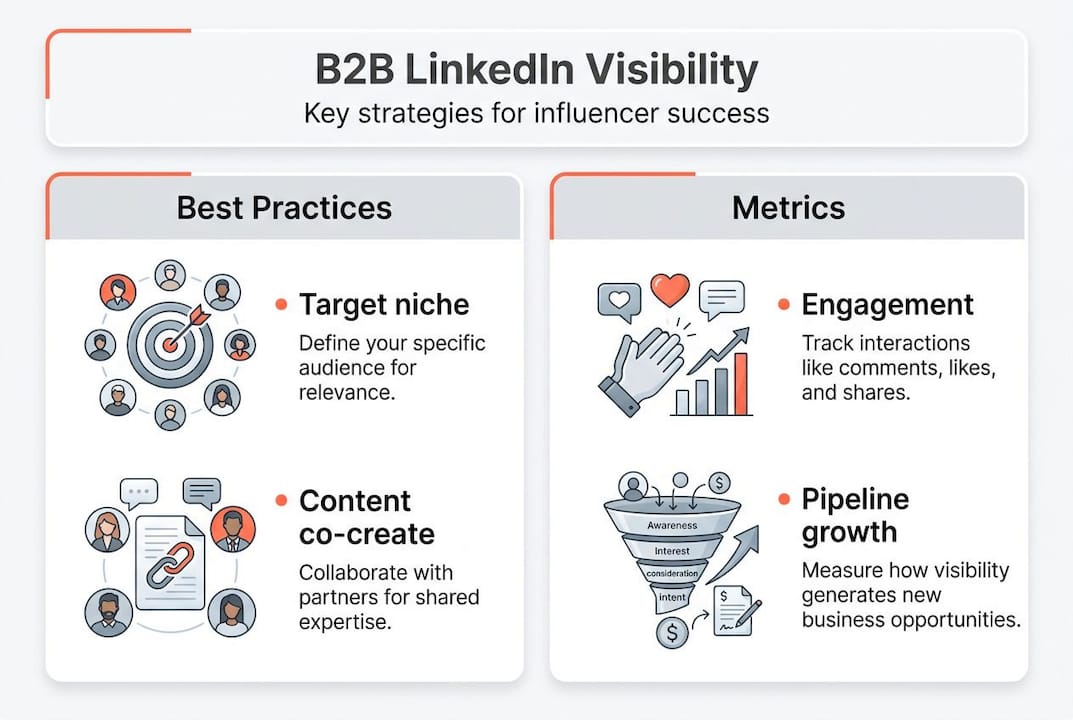
Here’s the uncomfortable reality: LinkedIn content volume has surged dramatically over the past three years. More brands, more thought leaders, and more sponsored posts compete for the same finite attention. For mid-sized companies without enterprise-level ad budgets, winning on raw reach alone is a losing game.
The three visibility drivers unique to LinkedIn:
- 🎯 Credibility signals: Who endorses your brand matters more than how many people see it. A trusted industry voice sharing your content carries far more weight than a paid banner.
- 🤝 Audience alignment: Reaching 10,000 CFOs in your niche beats reaching 500,000 general professionals. LinkedIn’s targeting depth makes precision possible.
- 📈 Engagement quality: Comments from senior decision-makers, reshares by industry influencers, and saves by active buyers all signal algorithmic relevance and real business interest.
Traditional metrics like impressions and reach tell you almost nothing about whether your brand is actually building pipeline. Co-created content outperforms sponsored posts in driving funnel progression, lead conversion rates, and CRM entries. That’s the shift you need to make.
“The brands winning on LinkedIn aren’t the loudest. They’re the ones whose content gets shared by people their buyers already trust.”
Exploring creative LinkedIn campaign ideas can help you move beyond generic sponsored posts and start building visibility that actually converts.
Selecting the right influencers for B2B visibility
With a clear understanding of visibility’s value, the next step is finding influencer partners who actually move the needle.
The biggest mistake mid-sized B2B companies make is chasing follower counts. A LinkedIn creator with 500,000 followers in a mixed professional audience will almost never outperform a niche expert with 50,000 highly engaged followers in your exact target sector. Niche experts with 50k engaged followers consistently outperform mega-influencers for mid-sized companies because the audience quality is simply incomparable.

Micro-influencers vs. mega-influencers: A direct comparison
| Factor | Micro-influencer (10k-100k) | Mega-influencer (500k+) |
|---|---|---|
| Audience relevance | High, niche-specific | Mixed, broad |
| Engagement rate | 3-8% average | 0.5-2% average |
| Cost per collaboration | Accessible for mid-sized budgets | Often prohibitive |
| Trust level | Peer-like authority | Celebrity-like distance |
| B2B conversion potential | Strong | Weak to moderate |
Manual vetting is another trap. Scrolling through profiles, checking post history, and trying to assess audience authenticity by hand wastes hours and still leaves you exposed to fake followers and inflated engagement. Platforms built for influencer vetting for ROI remove that guesswork and give you verified data upfront.
Step-by-step influencer selection checklist:
- Define your target audience segment precisely (industry, seniority, company size)
- Search for LinkedIn creators whose content consistently addresses that segment’s challenges
- Analyze engagement quality, not just volume (look for substantive comments from relevant professionals)
- Verify audience authenticity using a dedicated vetting tool or platform
- Review past brand collaborations for tone alignment and disclosure transparency
- Assess content format preference (video, text posts, carousels) against your campaign goals
- Confirm willingness to co-create rather than just sponsor
Pro Tip: Don’t rely solely on an influencer’s media kit. Request access to actual post analytics before committing to a collaboration. Authentic engagement patterns are far more revealing than polished decks. Pairing this with LinkedIn influencer engagement tactics ensures you’re building on a solid foundation from day one.
Building high-impact LinkedIn influencer partnerships
Once you’ve identified the most relevant influencers, it’s time to optimize how you collaborate for visibility and measurable business results.
Not all partnerships are created equal. The structure of your collaboration determines whether you get a one-off spike in impressions or a sustained visibility engine that feeds your pipeline over months. The difference comes down to three things: alignment on goals, the right compensation model, and the content formats you choose together.
Partnership models comparison:
| Model | Structure | Best for | Risk level |
|---|---|---|---|
| Flat fee sponsorship | Fixed payment per post | Quick brand awareness | High (no performance tie) |
| Hybrid compensation | Fixed base + performance bonus | Sustained visibility campaigns | Low to medium |
| Equity or long-term retainer | Ongoing ambassador relationship | Deep brand integration | Low (high commitment) |
| Revenue share | Commission on attributed leads | Direct response campaigns | Medium |
Hybrid compensation aligns incentives between your brand and the creator. When an influencer earns more when the content performs, they invest more in making it resonate.
Content formats that consistently outperform on LinkedIn:
- 🎥 Co-created video content: Native LinkedIn video with an influencer sharing genuine perspective on your brand’s solution drives the highest engagement and trust transfer
- 📄 Expert-authored carousels: Influencer-written carousel posts that reference your brand in context feel organic and generate strong save rates
- 🎙️ Live sessions and webinars: Joint LinkedIn Live events position your brand alongside a trusted voice in real time
- ✍️ Long-form articles: Co-authored thought leadership pieces rank well in LinkedIn search and build lasting credibility
One-off posts are the most common and most wasteful approach. A single sponsored post rarely builds the recognition and trust needed to move a B2B buyer. Sustained relationships, where an influencer references your brand across multiple touchpoints over weeks, create the familiarity that drives pipeline. Explore how building LinkedIn communities through consistent influencer partnerships amplifies this effect significantly.
Pro Tip: Before launching any collaboration, agree on both qualitative goals (tone, brand perception, message consistency) and quantitative goals (engagement rate targets, lead volume, CRM entries). This prevents misalignment and gives you a clear baseline for optimization. Strong influencer engagement drives results only when both parties know exactly what success looks like.
Measurement and continuous improvement of brand visibility
A well-crafted partnership isn’t enough. It’s how you measure and optimize that truly delivers ongoing visibility and business growth.
Most B2B marketing teams still report LinkedIn influencer campaign success using impressions and likes. Those numbers feel good in a slide deck, but they don’t tell your CFO whether the investment is generating pipeline. The shift from vanity metrics to business impact metrics is non-negotiable if you want to sustain budget and scale your program.
Key LinkedIn visibility KPIs to track:
- 📊 Lead conversion rate: What percentage of influencer-driven traffic converts to a qualified lead?
- 🗂️ CRM entries: How many new contacts entered your pipeline directly from influencer content?
- 🔄 Funnel progression: Are influenced leads moving through stages faster than organic leads?
- 💬 Engagement quality score: Are comments coming from your target buyer personas?
- 🔗 Content attribution: Which specific posts or formats drove the most pipeline activity?
Track funnel progression and CRM entries rather than surface-level metrics to understand the true business impact of each collaboration. This requires connecting your LinkedIn campaign data to your CRM, which most teams skip but every serious B2B program needs.
“Brands with mature video and influence strategies are 1.8x more likely to exceed their marketing goals compared to those relying on static content alone.”
Use engagement metrics for influencer campaigns to build a consistent reporting framework across all your partnerships. And when you’re ready to connect visibility metrics to broader revenue targets, aligning marketing goals on LinkedIn provides a structured approach to tying influencer activity directly to ROI.
Pro Tip: Review every partnership quarterly. Assess which influencers are generating pipeline movement, which content formats are converting, and whether your compensation structure still aligns incentives effectively. Adjust before performance dips, not after.
Conventional wisdom is failing mid-sized B2B brands on LinkedIn
Let’s step back and address one of the biggest reasons most mid-sized firms struggle with visibility: they’re following a playbook that no longer works.
The conventional approach goes like this: find a well-known LinkedIn creator with a large following, pay for a sponsored post, and wait for leads. It sounds logical. It rarely delivers. The reality is that one-offs fail vs. sustained relationships, and brands that ignore video in their influencer strategy are leaving serious performance on the table.
We’ve seen mid-sized B2B companies burn significant budgets on mega-influencer posts that generate thousands of impressions and zero pipeline movement. The audience was too broad, the content too promotional, and the relationship too transactional to build any real trust.
What actually works is smaller, sustained partnerships with niche experts who create genuine video content around your brand’s value proposition. These collaborations feel authentic because they are. The influencer’s audience trusts them, and that trust transfers. Pair this with CMO perspectives on influencer trust and you’ll see a consistent pattern: the brands winning on LinkedIn in 2026 are investing in relationships, not transactions. 💡
Boost your brand visibility with smarter LinkedIn campaigns
Ready to put these strategies to work and see real results? Here’s your shortcut to launching smarter LinkedIn campaigns.
Kawaak connects mid-sized B2B brands with verified LinkedIn creators who are ready to co-create content that drives real visibility and pipeline growth. No more manual vetting, no more guessing on compensation structures, and no more one-off posts that go nowhere.
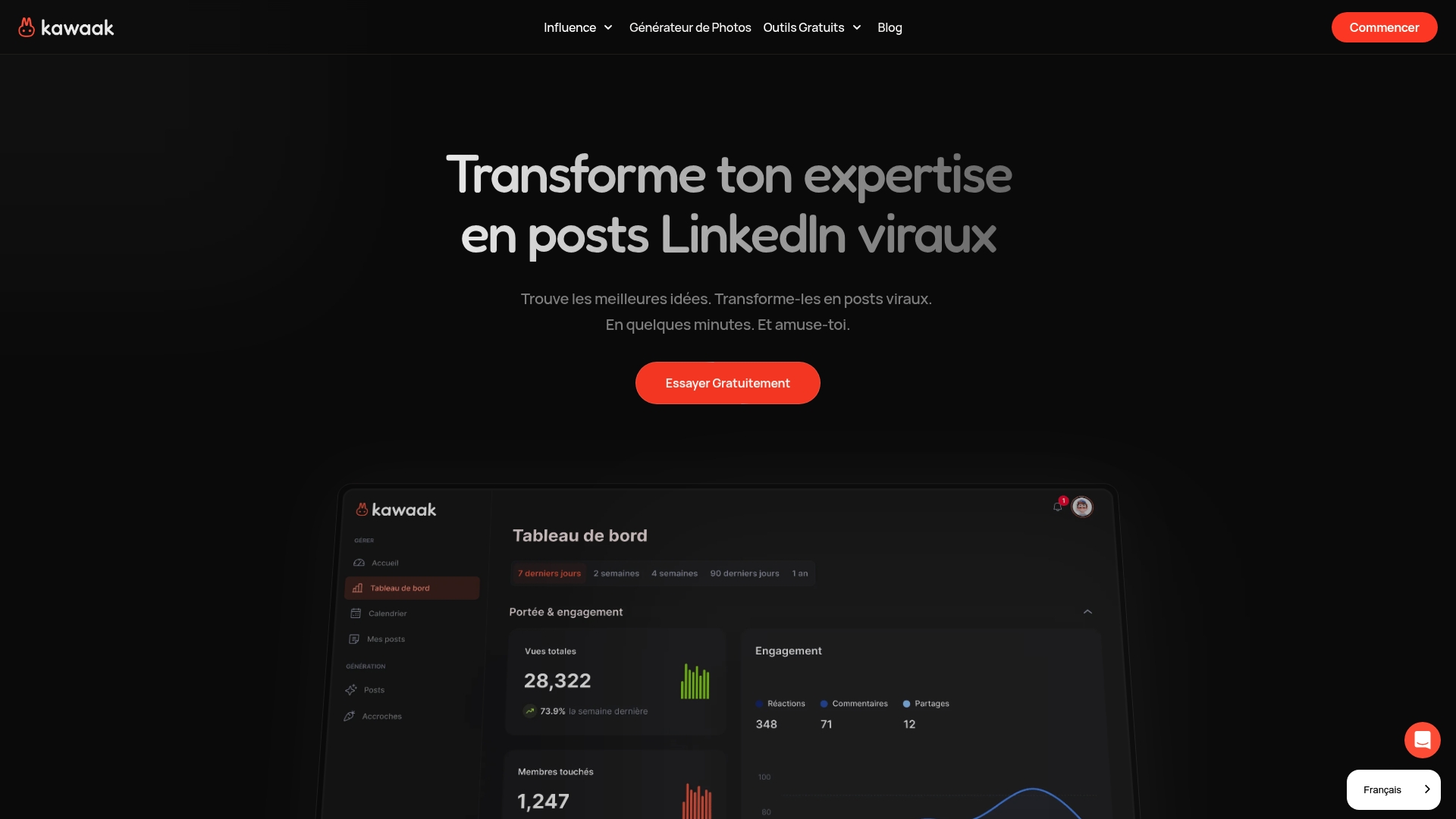
The Kawaak platform simplifies every step, from influencer discovery and audience verification to campaign management and performance tracking. Whether you’re launching your first LinkedIn influencer collaboration or scaling an existing program, Kawaak LinkedIn influencer campaigns give you the tools and the talent to execute with confidence. Book a consultation today and let’s build a visibility strategy that actually moves your pipeline. 🚀
Frequently asked questions
What is the most effective way to increase brand visibility on LinkedIn for B2B companies?
Partner with niche LinkedIn influencers for co-created content and track engagement quality to ensure your visibility translates into real pipeline movement rather than empty impressions.
How do I identify authentic influencers on LinkedIn?
Vet influencers by engagement quality and check for audience authenticity to avoid fake followers, prioritizing substantive comments from relevant professionals over raw follower counts.
Which metrics matter most when measuring LinkedIn visibility from influencer campaigns?
Track lead conversions and CRM entries alongside funnel progression instead of relying on impressions or likes, which tell you nothing about actual business impact.
Why are micro-influencers preferred over mega-influencers for mid-sized B2B firms?
Micro-influencers deliver stronger ROI because niche experts with 50k followers bring tighter, more relevant audiences that are far more likely to include your actual target buyers.